

Southwest's A/B/C boarding is gone. Here's the group order that replaced it.
Eight numbered groups replaced A/B/C. Your fare and seat set your place now — and the only thing boarding still wins you is a spot for your carry-on.
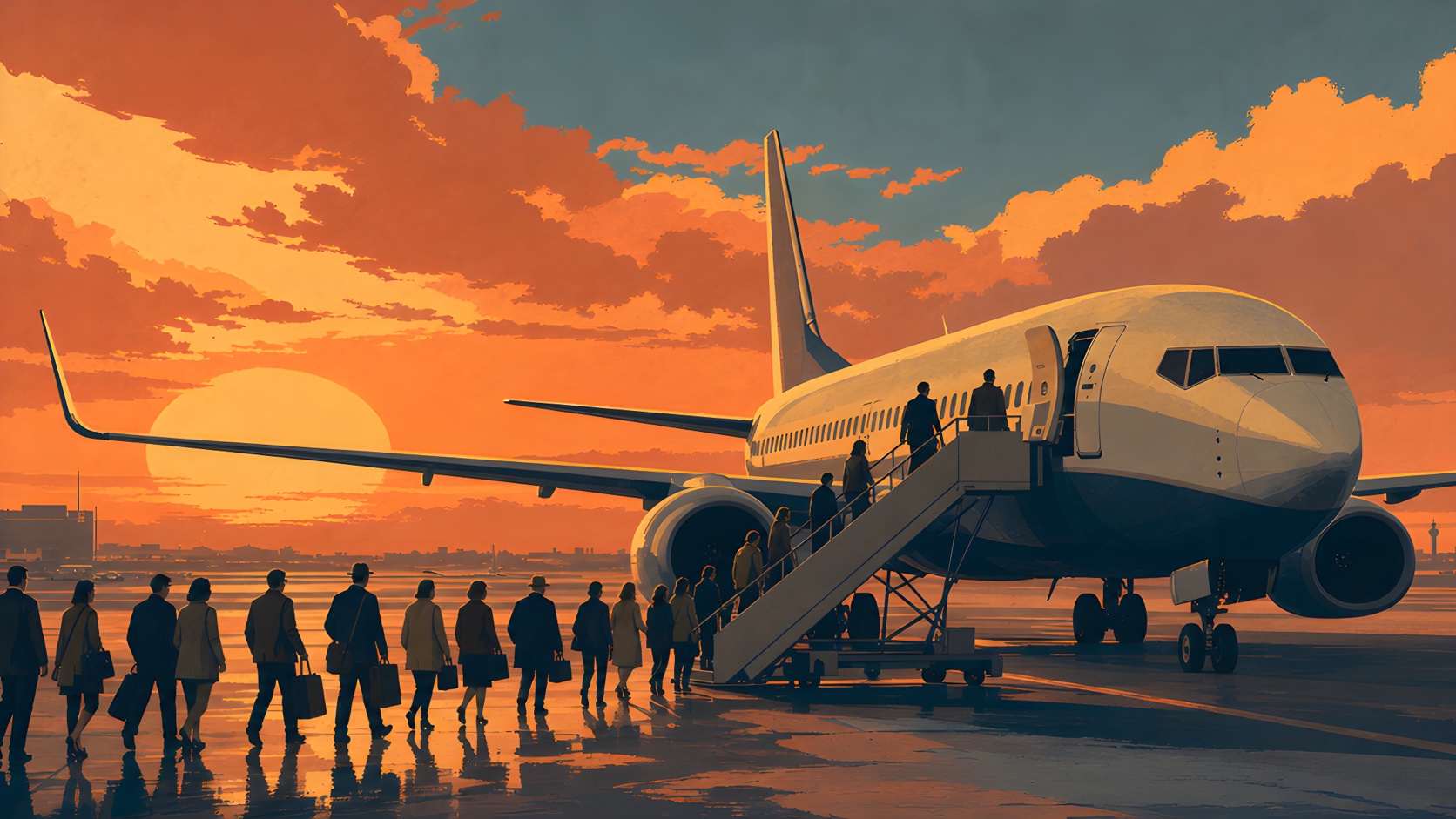
Southwest boarding now runs on eight numbered groups, and your group is printed on your boarding pass at check-in rather than fought for at the gate. For travel on or after 27 January 2026, the A/B/C letters are gone. Where you board follows the seat you already hold, set by your fare, seat type and Rapid Rewards status.
If you flew Southwest before the change, the boarding pass you remember listed a letter and a number, A1 through C60, and your job was to line up in order and claim any open seat. That system is retired. The seat is assigned before you reach the gate, so boarding order no longer decides where you sit. It decides one thing now: how soon you and your carry-on are settled. The rest of this guide maps the eight groups, says plainly what happened to A/B/C and EarlyBird, covers family boarding and A-List treatment, and gives the verdict on whether Priority Boarding is worth buying.
What happened to A, B and C
The old system sold you a position. EarlyBird Check-In auto-checked you in to earn a lower number; Upgraded Boarding let you buy into the A1 to A15 band at the gate; everyone else got a position by how early they checked in at the 24-hour mark. The letter and number on your pass set your place in a single queue, and the queue set your seat.
All of that machinery is gone for travel on or after 27 January 2026. There is no A/B/C, no 1 to 60 position number, and no EarlyBird or Upgraded Boarding to buy a better one. The reason is structural: with seats now assigned at booking or check-in, there is no seat to race for, so the queue no longer needs to rank you to the individual position. It only needs to call the cabin in a sensible order, which is what the eight groups do.
So the honest answer to "what happened to my A-group" is that the thing it bought you, first pick of the open cabin, no longer exists to be bought. Your equivalent advantage now is the seat itself, chosen earlier, on a fare that boards earlier.
The eight boarding groups, in order
Here is the running order Southwest now boards in. Two rounds sit ahead of the numbered groups, then Groups 1 through 8.
| Round | Who boards | What puts you here |
|---|---|---|
| Preboard | Passengers with disabilities or who need extra time; unaccompanied minors | Need, not fare |
| Priority Boarding | Anyone who buys it within 24 hours of departure; active-duty US military with ID | Purchase or military ID |
| A-List Preferred | Rapid Rewards A-List Preferred members | Top-tier status, dedicated round before Group 1 |
| Group 1 | A-List members; Choice Extra fare | Status or the top fare |
| Group 2 | Extra Legroom seats on Choice and Choice Preferred fares | Seat type |
| Groups 3 to 4 | Choice Preferred fare, Standard or Preferred seats | Fare |
| Group 5 | Rapid Rewards Credit Cardmembers, if not already placed earlier | Card benefit |
| Groups 3 to 7 | Choice fare, Standard or Preferred seats; Getaways packages | Fare |
| Group 8 | Basic fare | Cheapest fare boards last |
A few things are worth reading off that table rather than memorising it. Your group is set by whichever of your fare, seat type or status earns the earliest call, so a Choice fare passenger sitting in an Extra Legroom seat boards with Group 2 on the seat, not Group 8 on the fare. Status and the top fare share Group 1. Basic, the cheapest fare, boards last, which is the same trade basic economy makes everywhere: you save at booking and pay in flexibility and position. The overlapping numbers are Southwest's own published bands: Choice Preferred is pinned to Groups 3 and 4, while a Choice fare can land anywhere from Group 3 to Group 7, and your boarding pass shows the single group you actually got.
The one number to hold onto is this: Basic boards in Group 8, and the bins are well picked over by then.
How boarding ties to your assigned seat
If you have flown Southwest before, this is the part your old instincts will trip over. Boarding order used to set your seat. Now your seat sets your boarding order. The causation flipped.
That is the through-line from the assigned-seating change itself, which we cover in full in our guide to how Southwest seat selection now works. The short version: the fare you buy decides which seats you can pick, Extra Legroom and the higher fares sit at the front, and on the cheapest fare a Standard seat is assigned for you. Because that seat is locked before you reach the gate, the only thing boarding order still protects is the overhead bin above it and how soon you are in your seat with your bag stowed.
So the question to ask before a flight is no longer "how do I get a good boarding number". It is "which fare and seat board early enough that my carry-on still finds a bin". If you are checking a bag and travelling light, boarding group barely matters now. If your roller has to go up top, it matters as much as it ever did, just for the locker rather than the seat.
Family boarding under the new system
The old family-boarding round, which let an adult travelling with a young child board between the A and B groups, is no longer how families stay together. The new mechanism is simpler and built into the booking.
Everyone on one reservation boards in the same group. Book the family together and the whole party is called as one, taking the strongest boarding position on the booking. A-List, A-List Preferred and Credit Cardmember boarding benefits extend to up to eight passengers on the same reservation, so one frequent flyer in the group lifts everyone travelling with them. Companion Pass holders and their companions take the highest applicable benefit between them.
The practical move is to keep the family on a single reservation rather than booking separately and hoping to be called together. One booking, one group, everyone walks on at once. If the booking is split across two reservations, that guarantee does not apply, and you are back to boarding in whatever group each reservation earns on its own.
Priority Boarding and the Choice Extra fare: worth it?
Two ways exist to board early on purpose now. One is the fare: Choice Extra, the successor to the old Business Select bundle, boards in Group 1 alongside A-List. The other is Priority Boarding, the purchasable round that boards right after Preboard, available within 24 hours of departure when seats in it remain.
Here is the verdict, and it turns on one question: does your carry-on need the bin?
With the seat already yours, neither buys you a seat. Both buy you overhead-bin access and a few quieter minutes settling in before the cabin fills. That is a real benefit on a full flight with a roller bag, and close to worthless if your bag fits under the seat in front. Buy Priority Boarding when you are carrying on, the flight looks full, and your bag has to go up top. Skip it when you are checking a bag, travelling with a small personal item, or boarding a half-empty mid-week flight where the bins have room to spare.
Choice Extra is the wider call, because you are buying a seat tier and Group 1 boarding together, not boarding alone. If you want the Extra Legroom seat anyway on a longer flight, the early boarding rides along for free and the fare makes sense. Buying Choice Extra purely to board in Group 1, on a flight where you would otherwise sit in a Standard seat, is paying a lot for a bin slot a standalone Priority Boarding purchase covers on its own. On boarding alone, Priority Boarding is the cheaper route to the front.
Before you book, it is worth seeing where the seats that board early actually sit, because the front-of-cabin and Extra Legroom rows are the ones tied to the earlier groups. We mark the legroom, the exit rows, and the seats to avoid on each of Southwest's aircraft:
- Southwest 737-700 seat map: 137 seats, the smallest of the three
- Southwest 737-800 seat map: 175 seats
- Southwest 737 MAX 8 seat map: 175 seats, the newest of the fleet
The decision is smaller than the old system made it feel. With the seat assigned, boarding order protects your carry-on and your first few minutes onboard, nothing more. Spend on it only when a bin is genuinely at stake: a full flight with a roller that has to go up top. Buy Priority Boarding, the cheapest way to the front, or lean on Choice Extra if you wanted the Extra Legroom seat anyway.
If you are checking a bag, travelling with a personal item, or boarding a half-empty flight where the bins stay open, none of this is for you — board in whatever group your fare earns and put the money toward the seat instead. The seat is the part you keep for the whole flight; the boarding group lasts about ninety seconds.
Frequently asked
- How many boarding groups does Southwest have now?
- Eight numbered groups, plus Preboard and a purchasable Priority Boarding round before them. For travel on or after 27 January 2026, your group prints on your boarding pass at check-in and is set by your fare, seat type and Rapid Rewards status rather than by how fast you grabbed a position.
- What happened to Southwest's A, B, and C boarding?
- The A/B/C letters and the 1 to 60 position numbers are gone for travel on or after 27 January 2026. Boarding now uses eight numbered groups tied to your assigned seat. EarlyBird Check-In and Upgraded Boarding, which bought a better position under the old system, no longer apply.
- Does Southwest still do family boarding?
- Yes, but it works differently. Everyone on one reservation boards in the same group, so a family booked together stays together without a separate family-boarding round. Your group follows the strongest seat or status on the booking, and boarding benefits extend to up to eight passengers on the reservation.
- Is Priority Boarding worth buying on Southwest?
- It is the purchasable round that boards just after Preboard, available within 24 hours of departure. With a seat already assigned, you are buying overhead-bin access and an earlier settle, not a seat. Worth it if you are carrying on and need the bin; skip it if your bag fits under the seat.
- What boarding group do A-List members get on Southwest?
- A-List members board in Group 1. A-List Preferred members board earlier still, in a dedicated round before Group 1. A-List Preferred also gets an Extra Legroom seat at booking, while A-List gets Extra Legroom on a space-available basis within 48 hours of departure.