

American Airlines Main Cabin Extra: worth it, and when to skip it
The seat behind it is identical. What you pay for is the gap in front of your knees — earned on a long daytime leg, wasted on a two-hour hop.
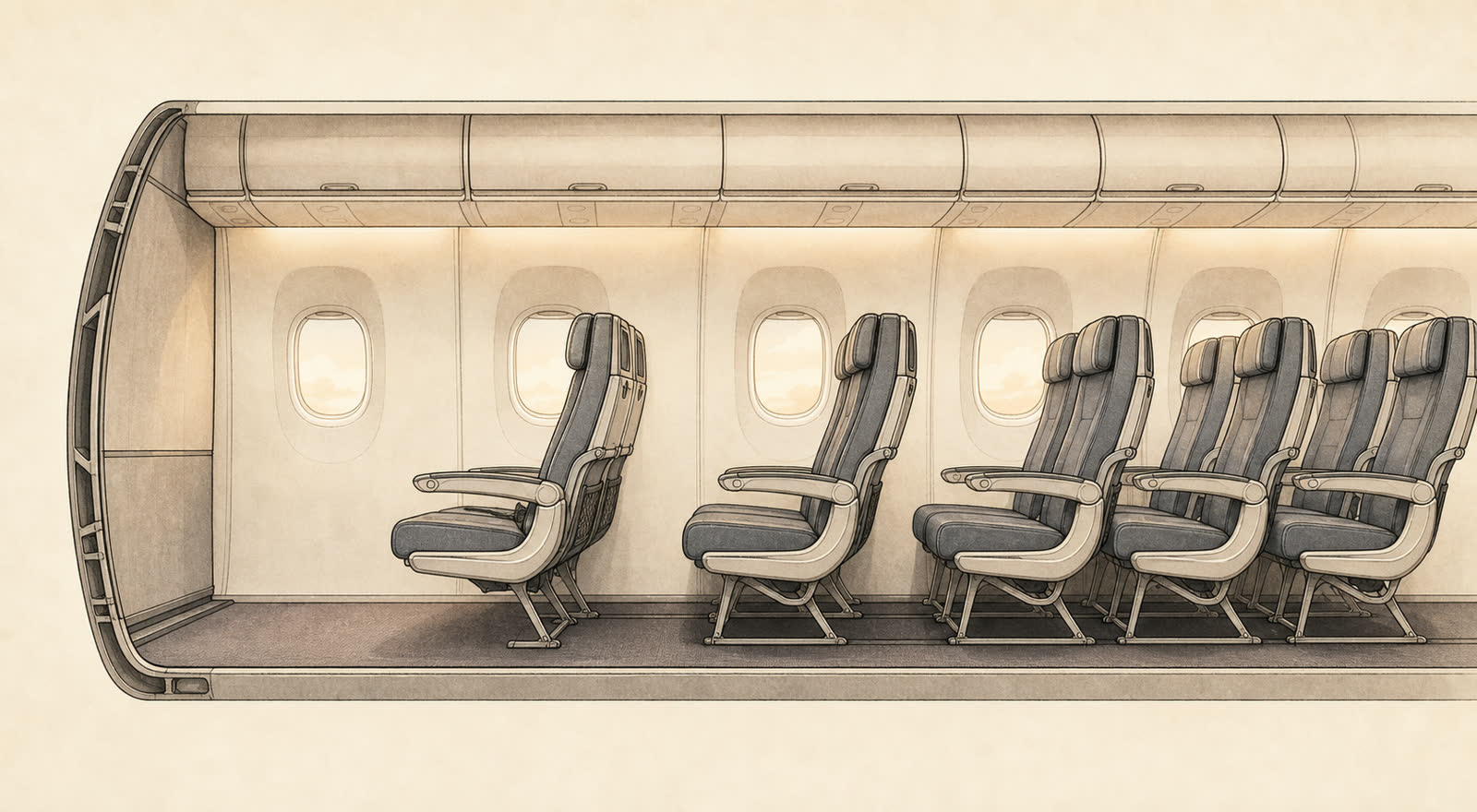
American Airlines sells Main Cabin Extra as the seat with room to breathe, and on the right flight it is. It is also the seat people buy on the wrong flight, on a two-hour hop where the standard row would have been fine, or on an overnight where the real comfort is one cabin further forward. The seat is identical to the one behind it. What you are buying is the gap in front of your knees, earlier boarding and a free drink, and whether that gap is worth the fee depends entirely on the leg you are flying.
This guide covers what the extra inches actually buy, where they are worth paying for, and the flights where the standard Main Cabin seat is the smarter call. Every product detail below is drawn from American's own Main Cabin Extra page, because the fee moves with the route and the elite rules changed this year. The seat counts come from the American Airlines maps we check by hand.
What the extra inches actually buy
Start with what does not change. Main Cabin Extra is the same seat as standard Main Cabin: same width, same recline, same tray table. American describes the difference plainly as more room to stretch out at the front of the Main Cabin, and that is the whole of it on the seat itself. You are not buying a better seat. You are buying the distance between your knees and the seatback in front.
How much distance depends on the aircraft, and this is the part the marketing rounds off. American lays out its standard Main Cabin at roughly 30 to 31 inches of pitch across the narrowbody fleet, and Main Cabin Extra adds a few inches on top at the front rows and the exit rows. There is no single fleet-wide number, so the gain you get on a 737-800 is not the gain you get on a 787-9. A few inches is the difference between cramped and comfortable on a full flight, but it is a few inches, not a different class of travel.
The seat comes bundled with two things worth naming. The first is Preferred Group 5 boarding, which gets you on earlier and, more usefully, gives you a real shot at overhead bin space before it runs out. The second is complimentary beer, wine and spirits on flights with full drink service. Neither is the reason to buy the seat, but the bin-space edge is worth more than it sounds on a full flight where the last passengers to board are gate-checking their bags.
Where Main Cabin Extra is worth it
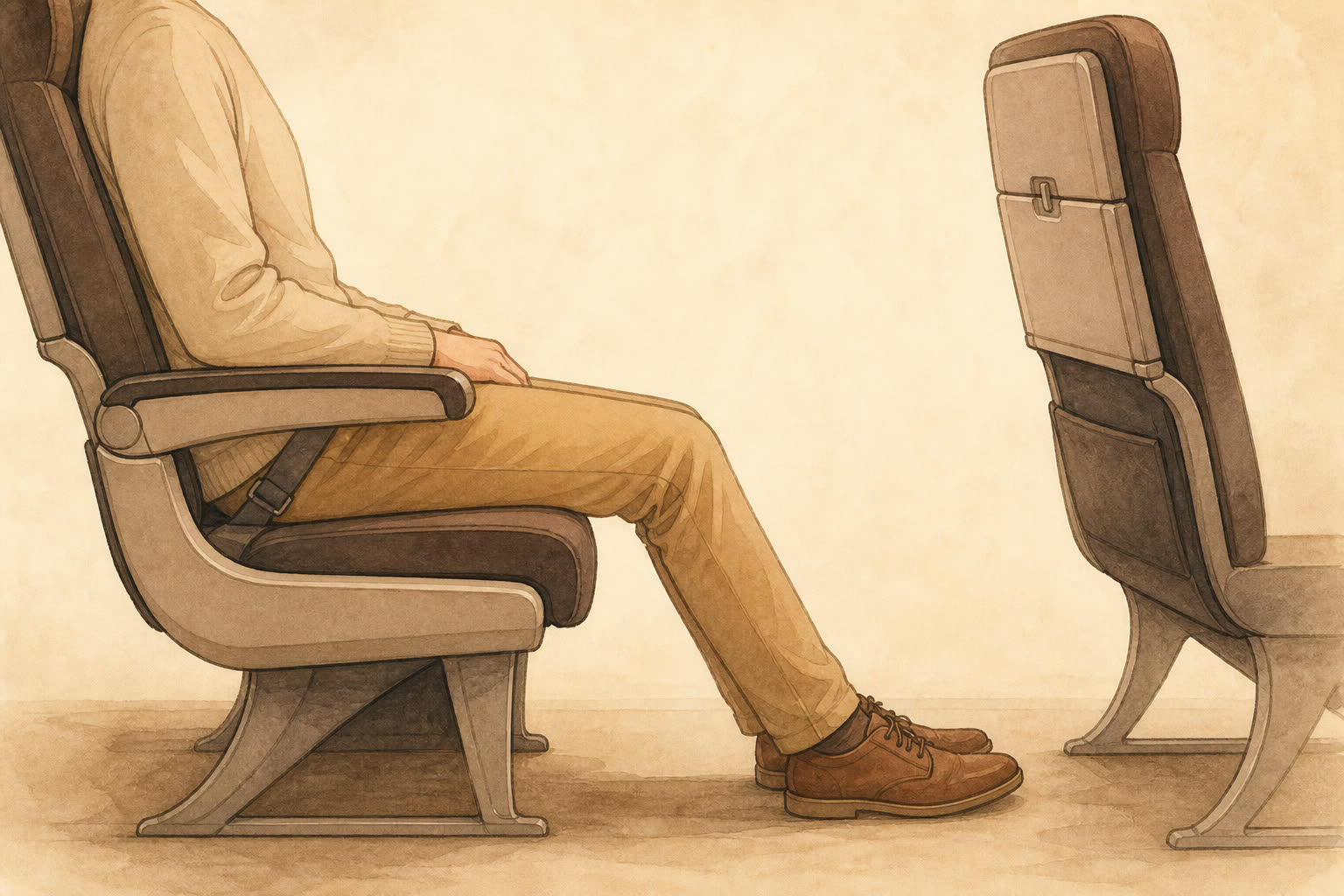
The case for paying up is strongest on a long daytime flight in the standard cabin with no lie-flat option, or one you have decided not to pay for. On a transcon that runs four or five hours in daylight, the extra inches earn the fee: you are awake, you want to work or stretch, and the standard 30-inch pitch tells on your knees by the second hour. This is where the seat does exactly what it promises.
It is also worth it for anyone tall enough that a standard economy seat is a genuine problem rather than a mild annoyance. If your knees touch the seatback in a normal row, the few extra inches are not a luxury, they are the difference between a flight you tolerate and one you dread. The taller you are, the lower the fee has to climb before it stops being worth it.
The quiet third case is the exit row. On several American narrowbodies, the exit rows carry the extra legroom and are flagged separately from the Main Cabin Extra block, which means they sometimes price differently, and occasionally lower, for the same stretch of legroom. It is worth checking the exit row before you commit to a forward Main Cabin Extra seat, because you may be able to buy the same knee room for less, with the tradeoff that exit-row seats carry duties and often do not recline.
Where the standard seat beats paying for it
Here is the part American's page will not tell you: the flights where the money is better left in your pocket.
On a short hop, the seat wins. If the flight is under a couple of hours, the standard Main Cabin seat does the job, and the extra inches you are paying for are inches you will spend most of the flight not needing. A one-hour segment in a 30-inch pitch seat is uncomfortable in theory and fine in practice. Bank the fee.
On a full-service overnight, the maths flips the other way. If you are flying a red-eye or a long international leg where the aircraft has a lie-flat business cabin, the honest comparison is not Main Cabin Extra against the standard seat. It is Main Cabin Extra against sleeping properly one cabin forward. A slightly roomier economy seat is still an economy seat you cannot sleep in. If the trip matters and the budget stretches, the money is better aimed at the front. If it does not, the standard seat and a neck pillow costs nothing and gets you the same amount of sleep as the roomier one, which is to say not much.
And on any flight where the fee has climbed high for the date and route, the standard seat wins by default. Main Cabin Extra pricing is not fixed; it moves with demand, the route and how close to departure you are buying. There is a price at which a few inches is worth it and a price at which it is not, and only you know where that line sits for the flight in front of you. Look at the number, then look at the leg, and decide in that order.
How elite status changes the maths

If you hold American status, the whole calculation changes, because the seat may be free. On a Main Cabin ticket, AAdvantage Executive Platinum, Platinum Pro and Platinum members get complimentary Main Cabin Extra at the time of booking, and Gold members within 24 hours of departure. The complimentary seat covers up to eight travelling companions on the same reservation, so a status holder booking for a family can seat the group in the roomier rows at no cost.
One rule changed this year and it catches Basic Economy buyers. American no longer offers complimentary Main Cabin Extra on Basic Economy fares bought on or after 18 May 2026, even for status members. If you are an elite flyer who bought a Basic Economy ticket after that date, the seat is no longer free, and the Basic Economy boarding restrictions apply even after you pay to move up to it.
If you do not hold status, you can still add the seat after booking. American lets you buy Main Cabin Extra after you have booked through the app, Reservations, select travel agencies or an airport kiosk, and AAdvantage members can pay with miles rather than cash. Paying with miles is worth a look when the cash fee has spiked, because the mileage price does not reliably move in step with it.
Main Cabin Extra is a few extra inches of legroom, sold well. On a long daytime flight, for a tall traveller, or when your status makes it free, it is an easy yes. Check the American Airlines seat maps for your exact aircraft, weigh the fee against the length of the leg, and decide in that order.
It is not for you on a short hop, where the standard seat does the job and the inches go unused, or on a full-service overnight, where the same money buys a lie-flat seat you can actually sleep in. The seat is worth what the flight makes it worth, and not a dollar more.
Frequently asked
- What do you get with American Airlines Main Cabin Extra?
- A few extra inches of legroom at the front of the Main Cabin, earlier boarding with Preferred Group 5, and complimentary beer, wine and spirits on flights with full drink service. The seat itself is the same width and recline as a standard Main Cabin seat. You are paying for legroom and a better shot at overhead bin space, not a different seat.
- How much extra legroom does Main Cabin Extra give you?
- It varies by aircraft. American lays out its standard Main Cabin at roughly 30 to 31 inches of pitch, and Main Cabin Extra adds a few inches on top of that at the front rows and the exit rows. There is no single number across the fleet, so the gain on a 737 is not the gain on a 787. Check the specific aircraft before you decide the money is worth it.
- Is Main Cabin Extra free with elite status?
- For some tiers, yes. On a Main Cabin ticket, AAdvantage Executive Platinum, Platinum Pro and Platinum members get complimentary Main Cabin Extra at the time of booking, and Gold members within 24 hours of departure, per American's own status page. The complimentary seat extends to up to eight travelling companions on the same booking. On Basic Economy fares bought on or after 18 May 2026, complimentary access no longer applies.
- When is Main Cabin Extra not worth paying for?
- On a short daytime hop where the seat itself does the job, and on a full-service overnight where you would sleep better in a lie-flat cabin than in a slightly roomier economy seat. If the fee is high and the flight is under a couple of hours, the standard seat usually wins. The exception is the exit row, which sometimes carries the extra legroom without the Main Cabin Extra price.
- Can you buy Main Cabin Extra after booking?
- Yes. American lets you add a Main Cabin Extra seat after you have booked, through the app, Reservations, select travel agencies or an airport kiosk, and AAdvantage members can pay with miles instead of cash. If you booked Basic Economy, the fare's boarding restrictions still apply even after you buy up to the roomier seat.