

Standing airplane seats: the saddle seat that stayed on the expo floor
The seat is real — the SkyRider saddle perch. The flights are not, and no regulator has approved one. Here is the honest version, with the numbers.
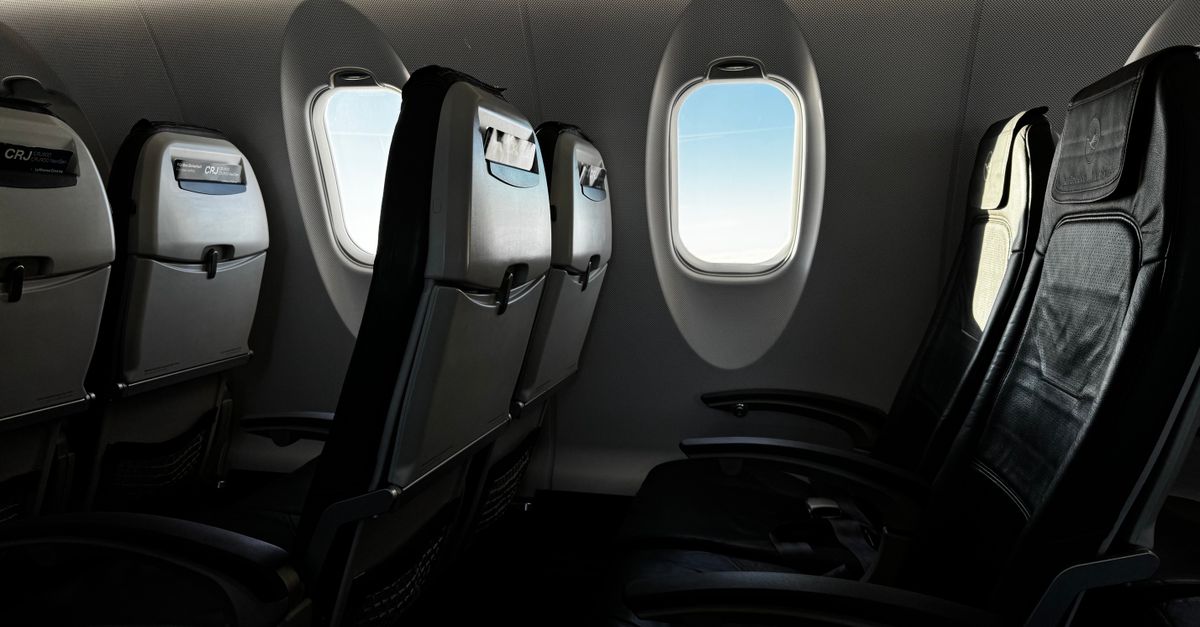
Standing airplane seats are real enough to photograph and far too unsafe to board. The concept exists, in the SkyRider, a near-vertical saddle seat from the Italian maker Aviointeriors, but no airline flies them, and no aviation regulator has ever certified one for passengers. So when a tabloid promises stand-up airplane seats by next summer, the honest answer is the one the breathless coverage skips: you are not flying in one, and the reasons why are more interesting than the hype.
This guide explains what a standing seat actually is, the legroom maths that drives the whole idea, and why the "coming soon" story keeps arriving without ever landing.
Real concept, no real flights. The SkyRider saddle seat exists and has been shown at trade expos for over a decade. No airline has officially adopted it, and neither EASA nor the FAA has certified a vertical or semi-standing seat for commercial service. Treat every "standing seats by 2026" headline as reported speculation, not a booking you can make.
A padded, near-vertical perch with a fixed back. You lean rather than stand.
About 23 inches of pitch — tighter than a standard economy seat.
Not submitted for EASA or FAA certification. No airline has committed.
What a standing airplane seat actually is
The term is a bit of a misnomer. You would not stand for the flight. The design everyone means when they say standing seats is the SkyRider, a saddle- or bicycle-style perch that Aviointeriors has shown at the Aircraft Interiors Expo through several generations, now around its third.
The idea is a near-vertical posture. You half-sit, half-lean against a raised, padded saddle, with a footrest and some arm support taking part of your weight. The back is fixed, so there is no recline. There is no tray table to speak of, the padding is minimal, and the seat is pitched only for short hops — the maker frames it for flights of up to about three hours.
Think of it less as a chair and more as a commuter-train lean rail with a seatbelt. That is the whole proposition: not comfort, but density.
The numbers behind airplane standing seats
Density is the point, so the numbers are where this gets concrete. The SkyRider has been pitched at around a 23-inch pitch — the gap between your seat and the one in front. Aviointeriors has claimed the layout could fit up to roughly 20 per cent more passengers into the same cabin floor, which is the entire commercial case: more seats sold per flight means lower fares per seat.
To feel how tight 23 inches is, compare it against real economy. Here is what the seat pitch looks like across the economy cabins we have measured on SeatMap.app.
| Seat | Typical pitch | What it feels like |
|---|---|---|
| SkyRider standing seat (concept) | ~23" | A near-vertical lean, not a sit. Not yet flown. |
| Tightest economy in our data | 28" | Budget short-haul, e.g. Scoot's A320neo. Snug but a real seat. |
| Typical economy | 31" | The everyday short- and long-haul standard. |
| Roomier full-service economy | 33–34" | Carriers that compete on space. Noticeably comfier. |
The gap is the story. The tightest mainstream economy seats sit at about 28 inches — and that is already cramped. The SkyRider would shave another five inches off the most cramped seat flying today, and roughly eight off a typical one. That is the trade the whole idea asks you to make: a cheaper fare in exchange for a posture closer to standing than sitting.
Are standing airplane seats actually coming?
Here is where the reporting and the reality part ways. Every so often a wave of stories announces that a low-cost airline will roll out standing seats "next year" — and 2026 is the latest year to get the treatment. The pattern is reliable: a striking render, a quote about cheaper fares, a headline that drops the word concept.
The reality underneath is steadier. Aviointeriors has not submitted the SkyRider for EASA or FAA certification, and no regulator anywhere has approved a vertical or semi-standing seat for passenger service. Several aviation outlets, Simple Flying among them, have walked back the "coming next year" framing for exactly this reason. A seat that has not entered the certification process cannot be installed on a commercial flight, no matter how confident the headline sounds.
So the claim to keep at arm's length is the specific one — a named airline, a named year, stated as settled fact. The accurate version is duller and more durable: it remains a concept, and it has stayed one for over a decade.
Which airlines will have standing seats?
The names that recur in the coverage are the big European budget carriers — Ryanair and easyJet turn up most often. Ryanair's own boss has mused about standing or bar-stool-style cabins in interviews over the years, which keeps the story alive. But musing in an interview is not the same as a launch.
To be plain about it: no airline has officially adopted standing seats. The carrier mentions you read are speculation, sometimes built on an old quote, sometimes on a concept render mistaken for a product photo. Until a seat clears certification and an airline files it into a real cabin, there is no "which airlines" — only which airlines have been asked the question.
When you are choosing a seat on a flight you can actually book, the more useful question is which of the real options is worth having. That is the ground our guide to choosing the best airplane seat covers, and at the opposite end of the legroom scale, our exit row seats guide walks the seats with the most space rather than the least.
Why standing seats keep not happening
If the engineering exists and the cost case is real, why has nothing flown? Three walls, in rough order of height.
Evacuation. Every cabin layout has to clear the 90-second rule — the requirement that everyone aboard can get out in 90 seconds with half the exits blocked. A denser, lean-posture cabin makes that harder to demonstrate, and the burden of proof sits with the manufacturer.
Certification. A new seat type is a long, expensive regulatory road through EASA or the FAA. Aviointeriors has not started down it for the SkyRider, which alone keeps the seat grounded regardless of airline interest.
Comfort and backlash. Even as a short-haul-only idea, a near-vertical perch is a hard sell to passengers and a public-relations risk to airlines. The reputational cost of being the carrier that made people lean for three hours is its own quiet deterrent.
None of these is a flat impossibility. Together they explain why the seat has lived at the expo stage for years — interesting enough to photograph, not close enough to board.
Standing seats are a genuine piece of aircraft-interior engineering and a genuine non-event for your next booking. The upside is narrow and entirely the airline's: more seats per cabin, cheaper fares in theory. The downside is yours — about 23 inches of space, no recline, a posture built for endurance. And the wall in front of all of it is regulatory: a certification process the SkyRider has not even entered.
So if you came here holding out for a cheaper stand-up fare next summer, stop waiting — there is nothing to book, and the headline will claim otherwise again next year regardless. The seat worth thinking about is the one on the aircraft you are actually flying, and that is a choice you can check before you pay.
For where to start once the standing-seat hype fades, see our take on the best SeatGuru alternative for picking a real seat with confidence, or read more about the design at the SkyRider entry on Wikipedia.
Standing airplane seats FAQ
Are standing airplane seats real? The seat is real as a concept — the Aviointeriors SkyRider, a near-vertical saddle seat shown at aircraft trade expos. It has yet to be certified or flown commercially, so no passenger has taken one on a scheduled flight.
Which airlines will have standing seats? None has officially adopted them. Ryanair and easyJet are the carriers most often named in the coverage, usually off the back of old interview comments, but neither has filed standing seats into a real cabin. The carrier mentions are speculation.
Are standing airplane seats safe and legal? No vertical or semi-standing seat has been certified by EASA or the FAA for passenger service. Until a seat clears certification, which the SkyRider has not been submitted for, it cannot legally fly on a commercial aircraft.
How much legroom would standing seats have? The SkyRider has been pitched at around 23 inches of pitch. For comparison, economy pitch runs from about 28 inches at its tightest to about 31 typically, so a standing seat would be roughly five to eight inches tighter than today's economy.
Are standing seats really coming in 2026? There is no confirmed 2026 launch. The recurring "coming next year" stories are media speculation, and 2026 is simply the latest year attached to a concept that has stayed a concept for over a decade. Treat any specific date as reported, not booked.
How much cheaper would a standing-seat ticket be? No airline sells one, so there is no real price. The idea rests on fitting up to around 20 per cent more passengers per cabin, which in theory would let an airline lower fares, but that saving is hypothetical until a seat is certified and flown.