

What fits under an airplane seat: the limit is what gets measured
The footwell is bigger than you think. The number that gets measured at the gate is smaller — and it is the one that counts. Here is the gap, per airline.
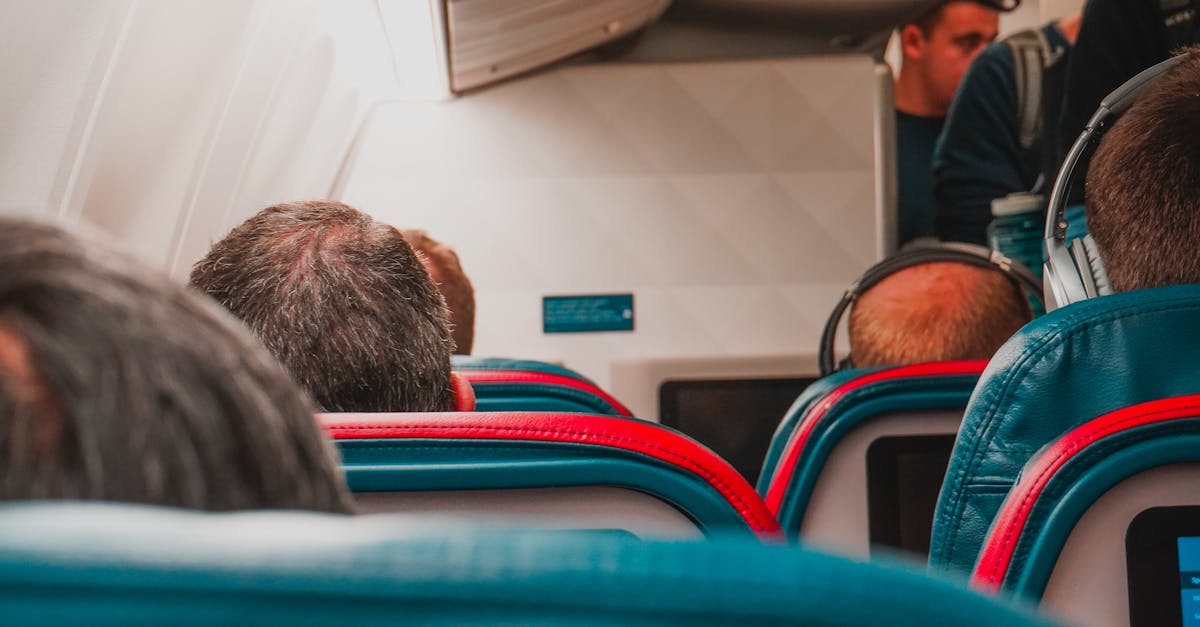
On most major US carriers, a personal item of around 18 x 14 x 8 inches (roughly 45 x 35 x 20 cm) is a safe ceiling for the bag you stow under the seat, though the exact limit varies by airline, and Delta does not publish a number at all. Where an airline does state a figure, it is the one gate agents measure against. The physical space under the seat in front is usually bigger than that, closer to 20 x 15 x 11 inches on many aircraft, but the limit is the binding number. The footwell does not care how large your bag is. The gate agent does.
Keep that distinction in mind and the rest of this guide makes sense.
The limit versus the actual space
The footwell under an economy seat is shaped by the seat frame, the floor, and any equipment boxes bolted between rows. On most mainline aircraft (narrowbodies like the 737 and A320, or widebodies in economy) that space runs roughly 20 inches wide, 15 inches deep, and 11 inches tall. Some aircraft have less, particularly where in-flight entertainment boxes sit between seats, or where a seat pitch under 30 inches compresses the clearance available.
That is the physical space. Your airline's personal-item limit is a separate thing: a policy dimension that defines the largest bag they will let you stow there without an extra charge. The limit is smaller than the space because airlines set it conservatively — to keep bags actually fitting on aircraft with variable seat pitches, to reduce boarding delays, and to manage overhead bin competition when large personal items crowd out carry-ons.
The practical consequence: a bag that slides under the seat does not necessarily mean it is within limits. If a gate agent asks you to size-check it and the bag exceeds the published dimensions, you may end up gate-checking it regardless of whether it physically fits.
The number to measure against is the limit, not the space.
Personal-item size limits by airline
The table below uses each airline's own published carry-on and personal-item policy. Dimensions can change, and airlines do not update them uniformly across booking surfaces — check the airline's own page before you travel.
| Airline | Personal-item limit (approx.) | Source |
|---|---|---|
| Delta Air Lines | No published size — must fit under the seat in front | delta.com carry-on policy |
| United Airlines | 17 x 10 x 9 in (43 x 25 x 22 cm) | united.com carry-on policy |
| American Airlines | 18 x 14 x 8 in (45 x 35 x 20 cm) | aa.com carry-on policy |
| Southwest Airlines | No published size — must fit under the seat in front | southwest.com travel fees |
A few points on reading this table:
The big three are not identical, despite the folklore. American publishes a personal-item limit of 18 x 14 x 8 inches. United is tighter — 17 x 10 x 9 inches. Neither Delta nor Southwest publishes a specific personal-item size at all; both policies simply ask that the bag fit under the seat in front.
Frontier and Spirit both have personal-item policies that are worth reading carefully on their own pages before you travel. Budget carriers are more likely to charge at the gate for bags that exceed their limits, and those limits can differ from the major network carriers.
"About" is the operative word here. These figures come from each airline's published policy as of 2026. Airlines adjust them periodically, and the versions shown on booking engines sometimes lag behind updated pages. Go to the source before you rely on any number, including these.
What actually fits in practice
A bag that is right on the limit in dimensions will fit comfortably if it is soft-sided. A bag that is right on the limit and hard-sided is less predictable because hard cases hold their shape regardless of what is around them.
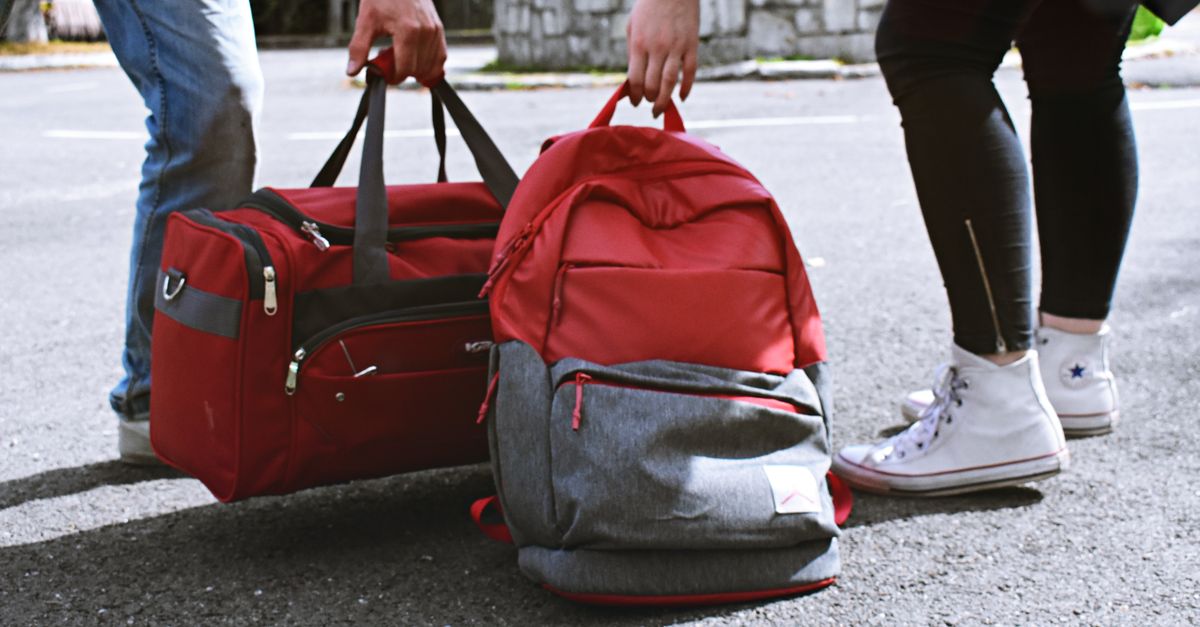
Three categories that routinely work:
Soft laptop backpacks, 17 to 18 inches. A well-packed, soft-sided backpack in this size range will sit under the seat in front with room to spare on most aircraft. The fabric compresses against the seat frame, the contoured shape adapts to the footwell, and — critically — you can push it in from the side if the bag is slightly oversized on one dimension. Measure the packed bag, not the empty one.
Small duffels. A small soft duffel (think a day bag, not a weekend bag) folds and compresses well and usually slides under without difficulty if it is within the limit. The lack of rigid structure is the advantage.
Dedicated under-seat rollers. Several bag makers now produce compact rolling cases specifically designed for under-seat storage — shorter and wider than a standard carry-on, with a depth profile matched to typical footwells. These fit reliably if you match them to your airline's limit. They do not compress, so dimensions matter more than with soft bags.
What fits less reliably:
Hard-sided personal-item cases. If the case dimensions are at the limit, you may find yourself forcing it into a footwell that curves in inconvenient places. And if an equipment box sits between the seats on that particular aircraft, your margin disappears.
Very full soft bags. A soft bag overpacked beyond the limit may not compress enough to behave like a soft bag. Measure it packed and at its heaviest.
The bulkhead gotcha
Bulkhead seats, the row directly behind a cabin divider, galley wall or lavatory partition, have nothing in front of them but a wall. There is no seat, so there is no under-seat storage.
Your personal item goes in the overhead bin for the entire flight.
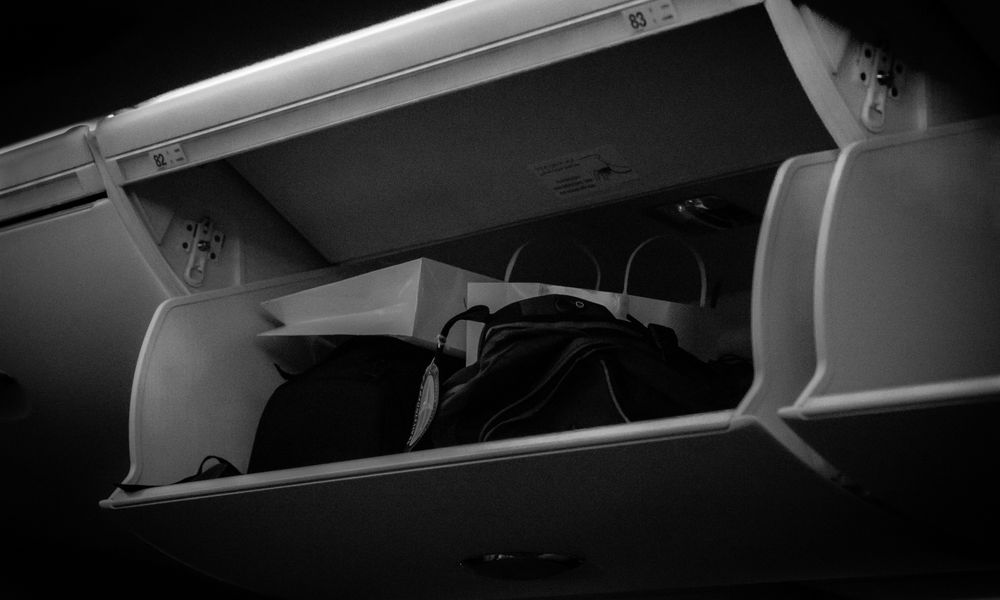
This is not just a boarding-and-landing rule. For the full duration of the flight, your bag is in the bin above you. If you are travelling with a medical device, a laptop you need mid-flight, or medication, think twice about a bulkhead seat before you choose it for the legroom. The extra space in front of you is real, but it comes at the cost of any in-flight access to what you packed.
Exit rows have a different version of the same constraint. The footwell exists, but FAA safety regulations require it to be unobstructed for takeoff and landing — the exit path must stay clear. On some aircraft, the exit-row footwell belongs to the seat in front and is inaccessible to you regardless. Confirm the exact arrangement with the crew when you board.
If under-seat access matters to your flight, and for many travellers it does, avoid both bulkhead seats and exit rows. There is more on this in our exit row seats guide.
How to be sure your bag fits before you fly
Three steps, in order:
1. Measure your bag packed. Pack it the way you plan to travel with it — laptop in, toiletry kit in — and then measure length, width, and height at the widest point of each dimension. Bags expand when packed. The empty measurement is not the useful one.
2. Compare against your airline's published limit, not the footwell. Find your specific airline's personal-item policy on their own website and use that figure. If the brief above does not include your carrier, or if you are flying an international carrier, go to the source.
3. Soft over hard where dimensions are close. If your packed bag is within a centimetre or two of the limit on any dimension, a soft-sided bag will compress and adapt. A hard case will not. When in doubt, go soft.
For more on choosing the right row once your bag is sorted, see how to choose the best airplane seat.
The personal-item limit is the gate test, not the footwell. A bag measured while packed, within your airline's published limit, and soft-sided where the dimensions are close will fit on any aircraft in any row — except a bulkhead row, where the bin is the only option.
If you travel light and stay well under the limit, or you check everything and carry only a small tote, none of this needs a second thought — the footwell will swallow it. The measuring matters when your bag is close to the line, which is exactly when people get caught.
Frequently asked
- What is the standard personal item size?
- It varies by airline. American Airlines publishes 18 x 14 x 8 inches; United is tighter at 17 x 10 x 9 inches; neither Delta nor Southwest publishes a specific size, and both simply ask that the bag fit under the seat. Budget carriers such as Frontier and Spirit publish their own limits, so check your airline's carry-on policy before you pack.
- Is the space under the seat bigger than the personal-item limit?
- Yes. The physical footwell on many aircraft is closer to 20 x 15 x 11 inches — larger than the personal-item limit most airlines publish. But the limit is what gets enforced at the gate, not the space.
- Do bulkhead seats have under-seat storage?
- No. Bulkhead rows have a wall or divider in front of them instead of a seat, so there is nothing to store a bag beneath. Your personal item goes in the overhead bin for the full duration of the flight, not just for takeoff and landing.
- Do exit rows have under-seat storage?
- Exit rows have a footwell, but FAA regulations require it to be clear for takeoff and landing so the exit path stays unobstructed. On some aircraft, the exit-row seat in front has its own under-seat space unavailable to you. Confirm with the crew before boarding.
- Will a 17-inch laptop backpack fit under the seat?
- A soft-sided 17-to-18-inch laptop backpack will typically fit under the seat in front if it is within your airline's personal-item dimensions. Hard-sided cases of the same nominal size are less forgiving because they cannot compress to fill the footwell shape. Measure your packed bag, not its empty form.
- What happens if my bag is too big for the personal-item limit?
- Gate agents can ask you to gate-check the bag, which usually means it travels in the hold at no extra charge — though policies vary by airline. On some budget carriers, oversized personal items attract a fee at the gate. Staying within the limit avoids the uncertainty.